A broadcast, not a shelf.
Most of what calls itself a temple online is an endless on-demand feed you scroll at will. NeuroTemple is the opposite. A rite begins at its appointed hour. A field forms for those who are present. It holds, it echoes briefly, and it ends. What you receive is here — and then it is gone.
The impermanence is the point.
Nothing is kept on a shelf to be consumed at convenience. You attend, as you would a real ceremony — you do not “play” it. The transience is not a limitation of the format; it is the discipline of the thing.
Where modern sound engineering serves ancient rite.
The audio is not a mood-scape assembled from stock samples. Real ritual instruments — the kangling, the drum, the chant — are carried without translation and without dilution, in studio-grade lossless sound, through a custom spatial-audio engine built by Ruslan Bozhok: composer and sound engineer, whose field recordings from Lake Baikal date to 2006, and whose work is registered with the U.S. Library of Congress and ASCAP.
Not the ceremony — that is only ever live. This is a short passage, so the sound itself can speak. A recorded practice carried by Anastasia Nikolaeva.
Excerpt · 1:10 · shared with permission.
Carried by practitioners, not performers.
NeuroTemple stands on a real lineage of the Tibetan tradition. Nothing here is invented for effect, and nothing is softened to flatter a foreign ear — the tradition is presented as it is. It is carried by people who have spent their lives inside it.
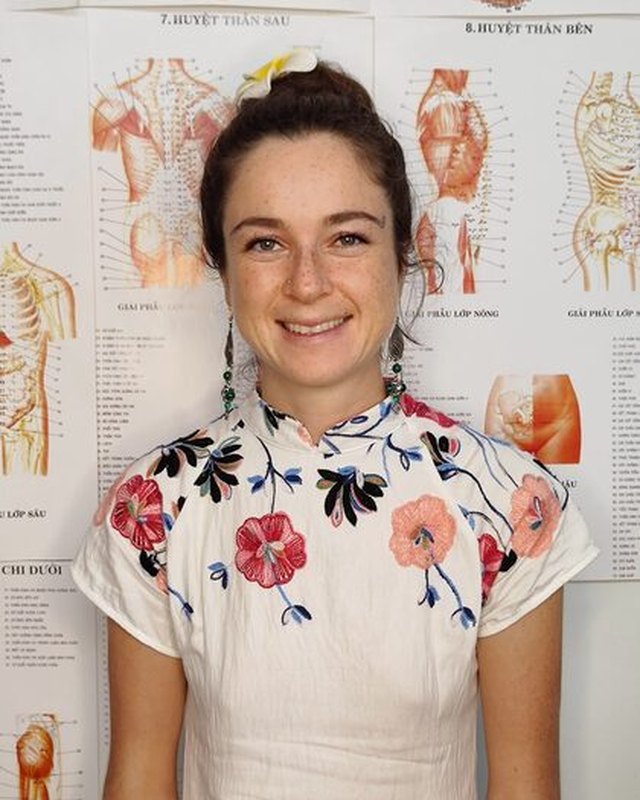
Anastasia Nikolaeva
Transmission & practice
More than fifteen years of study in the Traditional Tantra of the Tibetan schools — in closed retreats, monasteries and personal programs with masters of the tradition — with academic training in psychology and non-medical psychotherapy. She carries the tradition as it was given to her.
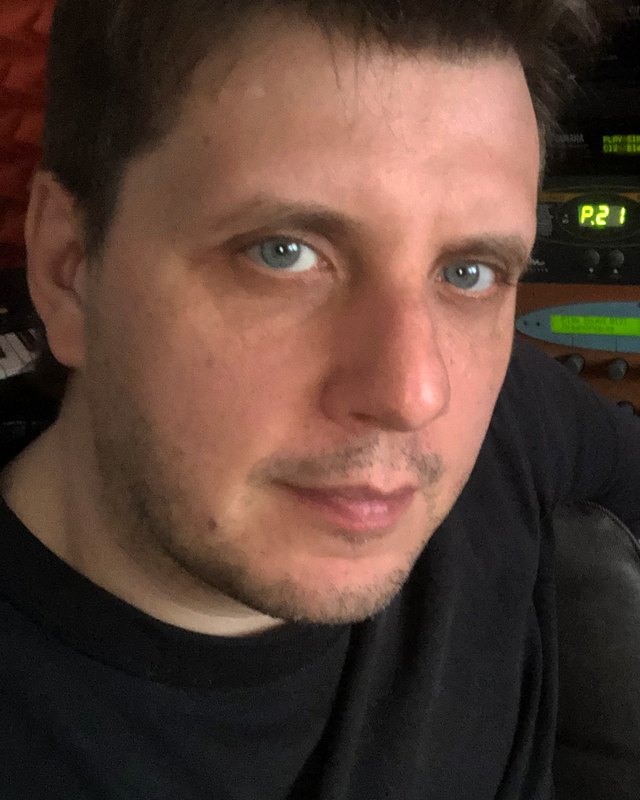
Ruslan Bozhok
Voice & sound of the rite
The rite is never translated — a translated rite stops being one. So what reaches the listener reaches them as sound. Composer and sound engineer, holding a state diploma in sound direction; member of the Russian Authors' Society and ASCAP; twenty-five years in the studio, with work registered at the U.S. Library of Congress. A separate line of his own: NLP practitioner, trained and certified by Andrei Pligin in 2003, and the Ericksonian approach under Alexander Blinkov. He carries the half of the rite that arrives.
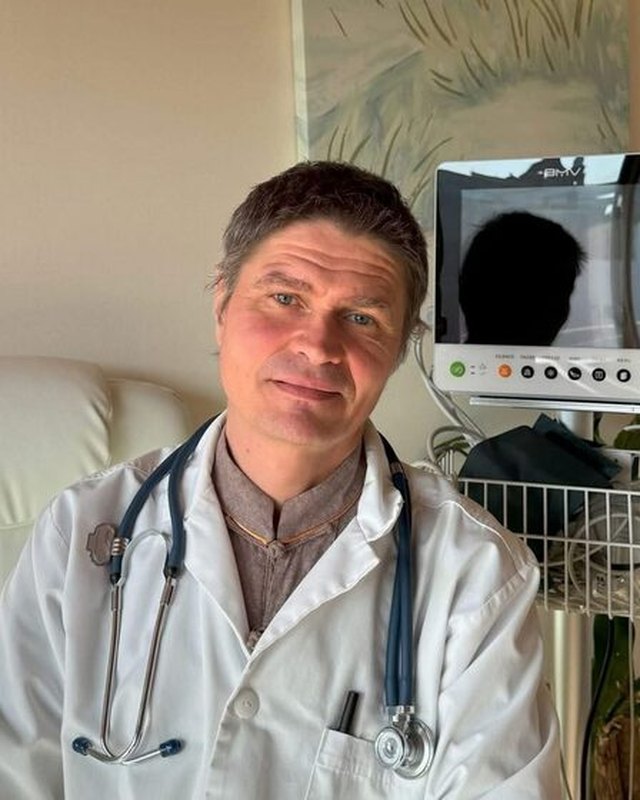
Nikolay Anikeev
Medicine & tradition
Instructor of Traditional Tantra and Nei Gong, with twenty-four years in the psycho-physical schools of Tibet and China. A physician by background — psychiatrist, neurologist and doctor of Eastern medicine, with thirty-six years in medicine. His medical practice is conducted separately and is not part of NeuroTemple.
In preparation.
The English temple is being built with the same care as the tradition it carries. A living broadcast keeps its own hours — this one is not open yet.